
We often hear messages about gratitude that can actually make us feel worse like “be grateful for what you have”, “look on the bright side”, “someone else has it worse”, “at least you have…” But, when you’re overwhelmed, healing, questioning a relationship, rebuilding your confidence, or realizing your life no longer feels right, these words can feel less like comfort and more like being told to stop asking questions.
But gratitude isn’t about ignoring what hurts. No, and it doesn’t mean staying in situations you’ve outgrown, tolerating behaviour that crosses your boundaries, downplaying disappointment, or telling yourself to be happy just because things could be worse. Real gratitude is more meaningful. When you slow down to notice what is good, safe, and truly valuable to you, you start to understand yourself in new ways.
Gratitude Does Not Mean You Have to Be Happy With Everything
Life is often more complex than either-or. We can be grateful for what we have while hoping for change, proud of how far we’ve come while mourning what we’ve left behind, and deeply caring for others while recognizing the need to protect our own well-being. Holding these seemingly conflicting emotions at the same time isn’t weakness or confusion. It’s emotional maturity.
Gratitude doesn’t mean you have to ignore disappointment. It lets you hold both appreciation and honesty together. Sometimes the most empowering thought is, “I’m grateful for what this gave me, and I’m still ready for something different.” That isn’t entitlement. It’s discernment.
When Gratitude Becomes People-Pleasing
This difference is important, especially if you’ve spent years being the empathetic one. Maybe you tell yourself not to complain because someone has been nice to you. You accept less because you don’t want to seem ungrateful. You stay because nothing seems seriously wrong. You keep saying, “I should be grateful,” even when you feel drained.
Gratitude says, “I appreciate what you’ve given me.” People-pleasing says, “Because you’ve given me something, I owe you access to me.” These are not the same thing. Appreciating someone doesn’t require sacrificing your boundaries. You can recognize their kindness, value their efforts, and still be honest about what you need. Gratitude is not an obligation, and saying thank you doesn’t mean giving someone unlimited access to your time, energy, or space.
Your Body Can Give You Information Too
Being aware of your nervous system doesn’t mean treating every feeling as a diagnosis or a magical truth detector. It means being curious about what’s happening inside you. Think of something you truly appreciate. Maybe your shoulders relax, your breathing gets easier, and you feel calm. Now think of something you tell yourself you should be grateful for. You might notice tension, restlessness, or the urge to explain yourself.
That doesn’t always mean the situation is wrong, but it’s information worth noticing. Emotional intelligence isn’t about following every feeling. It’s about being curious about what your feelings might be telling you. Research has found a link between gratitude, emotion regulation, and stress. This suggests that managing your emotions may help explain how gratitude can lower stress. Sometimes gratitude doesn’t push you to do more. Sometimes it helps you see that you’ve already been pushing too hard.
Gratitude Can Strengthen Self-Trust
We often believe confidence comes from achieving more, earning approval, or reaching major milestones. But real confidence is built through self-trust. It grows every time you listen to your instincts, honour your boundaries, walk away from what doesn’t feel right, survive something you thought would break you, or give yourself permission to rest without feeling the need to earn it. Confidence isn’t just about what you accomplish. It’s about knowing you can count on yourself.
Now you’re not just grateful for your circumstances. You’re grateful for your own growth. This matters because your self-worth grows when you stop seeing yourself as just someone things happen to and start noticing your choices, courage, boundaries, mistakes, and fortitude.
Gratitude Can Reveal What You Actually Value
Sometimes what feels like dissatisfaction is actually an identity shift. Your priorities, tolerance, and definition of success have changed. What formerly felt acceptable no longer does. You don’t have to stay loyal to an old version of yourself just because she once wanted something. You can appreciate who you were and still let yourself become someone new.
This is where gratitude connects with Signals & Standards. Signals are what you notice; standards are how you choose to respond. What you’re most grateful for often reveals what supports your well-being and helps you feel like yourself. A sense of peace, freedom, authenticity, or ease isn’t random. It’s information. When you pay attention to those moments, they can point you toward the boundaries, habits, and expectations that deserve a place in your life. Your gratitude may be showing you what you’re ready to protect.
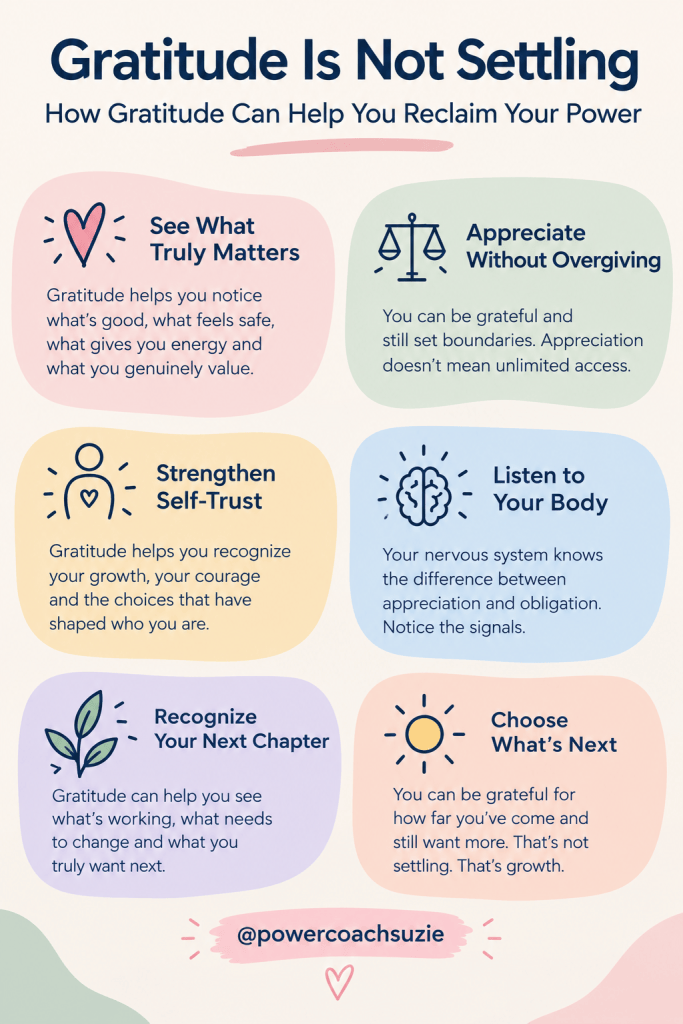
Gratitude Is Not Settling for Less
Psychologist and gratitude researcher Robert Emmons describes gratitude as both an affirmation of goodness and a recognition of where it comes from. He also points out that gratitude doesn’t mean pretending life is perfect or ignoring its difficulties. Research shows gratitude can support emotional wellness, though the evidence is mixed. A review of gratitude practices among workers found that some studies showed less stress and depression, but the effects on general well-being were not always consistent.
So gratitude isn’t a magic solution, and you shouldn’t feel pressured to do it perfectly. It’s simply another way to pay attention. Maybe the most honest way to practice gratitude isn’t to ask, “What should I be grateful for?” but instead, “What is my life showing me that I genuinely cherish?” Maybe the answer is peace. Or more honesty, more give-and-take, more rest, more freedom, more meaningful relationships, more time, or more of yourself.
This is where gratitude becomes empowering. It helps you recognize what matters, what nourishes you, and what you’re no longer willing to compromise. By appreciating your growth, your values, and the lessons you’ve carried forward, you gain a clearer sense of what deserves your energy moving forward.
Gratitude isn’t about convincing yourself you already have enough. It’s about seeing what’s valuable, being brave enough to protect it, and knowing when something no longer fits in your life. Sometimes reclaiming your power doesn’t start with changing everything. It starts with listening to yourself and trusting what you hear.
One.Step.At.A.Time.
Suzie
Listen to the Conversation
These are the kinds of conversations we’ll be exploring in this season of Signals & Standards with Suzie. Together, we’ll dive deeper into self-trust, emotional clarity, personal growth, relationships, boundaries, and the standards that shape our lives. Because sometimes the most important shift isn’t learning something new. It’s finally listening to what you’ve known all along.
Visit PowerCoachSuzie.com to learn more and join the conversation.

