Are you truly unsure, or are you avoiding an answer you already know? Sometimes the hardest part isn’t finding clarity. It’s accepting it.
Why We Stay Stuck When We Already Know the Answer
You know that feeling when you keep asking yourself the same question but never seem to get any closer to an answer? Should you stay or leave? Speak up or stay quiet? Keep trying or let go? You tell yourself you’re confused, but sometimes the confusion isn’t about the answer itself. Sometimes it’s about what happens after you admit the answer has always been there. Because once you stop pretending to be in the dark, you’re faced with a choice. And that’s where things get uncomfortable and most people don’t like how outside comfortable feels.
Be honest, have you ever caught yourself saying, “I don’t know,” about the same situation over and over again? Maybe it’s a relationship, a friendship, your career, or a decision you’ve been carrying around for months. You keep thinking about it, talking it through with others and yourself, and searching for clarity, yet somehow you never seem to move forward. Don’t get me wrong, sometimes “I don’t know” is completely valid and genuine. We all face situations where we need more information, more experience, or even more time before deciding. But sometimes that’s not really the issue. Sometimes you already know the answer, maybe more times than you give yourself credit for. You know how you feel and you certainly know what’s not working. It’s what keeps disappointing, frustrating, angering or exhausting you and giving you anxiety. The challenge isn’t discovering the truth. In fact, the challenge is accepting what that truth might require from you.
The Difference Between Uncertainty and Emotional Resistance
Real uncertainty happens when key information is missing. Emotional resistance is something different. It happens when the picture is becoming clear, but you’re not ready to face what it means. You notice the pattern and feel the discomfort. You see the same issue showing up again and again. Then your mind immediately starts looking for another explanation to justify it. Maybe things will change. Maybe you’re overthinking. Maybe you’re expecting too much. We’ve all been there. But, instead of accepting what you’re seeing at face value, you begin negotiating with it. You convince yourself you need more certainty when, in reality, all you may need is more courage.
The Quiet Signs You May Already Know the Truth
Most people think clarity arrives like a lightning bolt. In reality, it usually arrives quietly, behind the scenes so to speak. It’s the conversation that leaves you drained every time. It’s the relief you feel when plans are cancelled. It’s the issue that never gets resolved, no matter how often you discuss it. It’s the thought that keeps returning whenever life gets quiet. These are signals. If you’re constantly questioning where you stand with someone, that’s valuable information. If you’re regularly making excuses for behaviour that bothers you, that’s information. If you’ve had the same conversation multiple times and nothing changes, that’s information. Often, the problem isn’t that we miss the signal. It’s that we keep talking ourselves out of truly listening.
How the Word “But” Keeps You Stuck
This is where many of us get stuck. You can know something and still avoid acting on it. That’s when the “buts” begin showing up. But they’re trying. But we’ve known each other forever. But nobody’s perfect. But what if I’m wrong? But maybe things will get better. Sound familiar? Sometimes those thoughts are valid and based on reality. People do grow. Situations do improve. Relationships do survive difficult seasons. But sometimes “but” becomes a way of avoiding reality. The more we negotiate with what we know, the easier it becomes to compromise our own standards. We start accepting things we once said we wouldn’t tolerate. We keep making exceptions until we can no longer see where the line is.
What Are You Afraid Will Happen If You Trust Yourself?
Here’s a question worth asking yourself: What are you afraid will happen if you admit what you already know? Maybe you’re afraid of being alone or you’re worried you’ll regret your decision or afraid of disappointing someone. Maybe accepting reality means letting go of a future you hoped for or imagined. For many people, finding the answer isn’t the hardest part. Living with the answer is. Once you acknowledge the truth, you’re faced with a choice. You can continue ignoring it, or you can decide what to do with it. That’s where self-trust becomes essential.
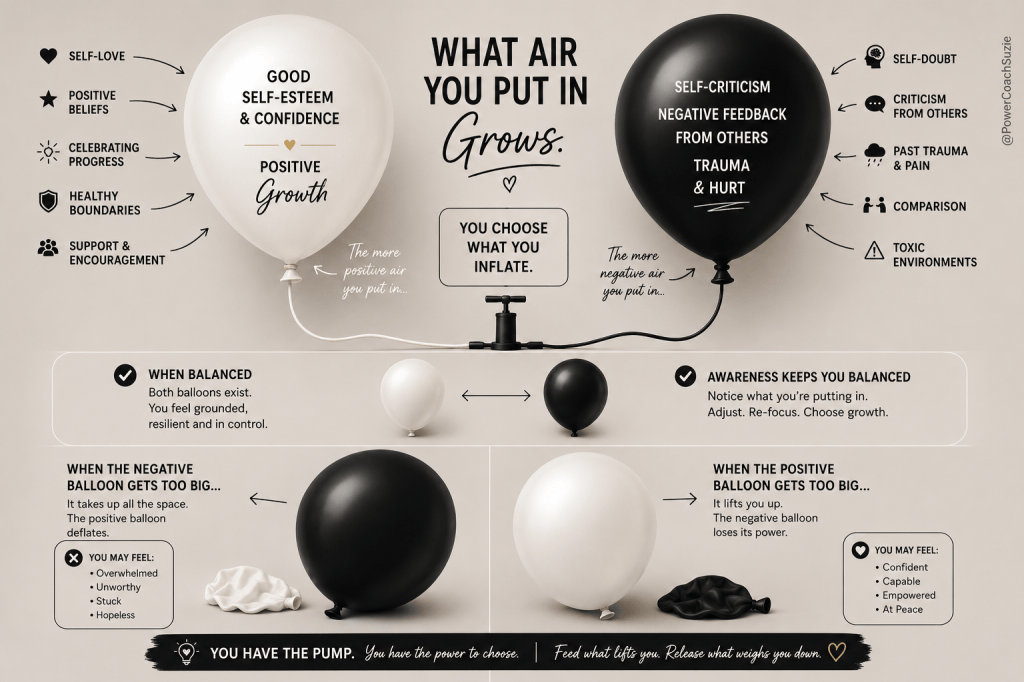
Which Balloon Are You Feeding?
Think of your self-esteem and confidence in yourself as two balloons. The white balloon represents confidence, self-worth, and positive growth. The black balloon represents self-criticism, negative feedback, trauma, and hurt. What you repeatedly focus on adds “air” to one balloon or the other. When one grows too big, the other begins to deflate. This is relevant to our discussion because when you stop listening to your instincts and justify others’ bad behavior towards you, you deflate the part of you the is needed to grow and thrive. The question I want to ask you is: Which balloon are you feeding?
Why We Keep Looking for More Certainty
Many of us believe that one more sign, one more conversation, or one more opinion will finally give us the certainty we’re looking for. The problem is that life rarely offers complete certainty. At some point, every meaningful decision requires trust. Not trust that you’ll make a perfect choice, but trust that you’ll be able to handle whatever comes next. That’s the foundation of self-trust. It’s believing that you can make the best decision available with the information you have today and adapt as life unfolds. Self-trust isn’t about guaranteeing the outcome. It’s about believing you can navigate the outcome, whatever it may be.
Your Feelings Are Information, Not Instructions
Remember that your feelings matter, but they aren’t always instructions. For instance, feeling frustrated doesn’t automatically mean you should leave. Just like feeling anxious doesn’t automatically mean something is wrong. Your emotions provide information about your experience and they highlight patterns, needs, and concerns that deserve your attention. Something you need to take seriously. If you consistently feel drained after certain interactions with certain people, pay attention. If resentment keeps showing up in certain situations, pay attention. If you’re constantly wishing someone would change, pay attention. The goal isn’t to react to every emotion. The goal is to understand what your emotions are trying to teach you.
Stop Asking for Permission to Make the Right Decision for You
Seeking advice is healthy. Getting another perspective can be incredibly helpful. But there’s a difference between gathering insight and handing someone else responsibility for your decisions. Many people spend years waiting for permission to say no, set a boundary, leave a situation, want more, or change their minds. Eventually, though, nobody else can decide for you. Nobody else has lived your experience or feels what you feel. Nobody else knows every conversation, compromise, disappointment, and lesson that brought you here. At some point, you have to ask yourself: What do I know? What do I need? What am I willing to accept? What am I no longer willing to explain away? Then ask one very important question: If nothing changed, would I still choose this? That question cuts through the noise of your emotions.
You Are Allowed to Change Your Mind
Maybe you said yes to something before you had all the information. Maybe you gave someone another chance or you stayed longer than you planned. That doesn’t mean you failed. It means you learned and growth changes us. Remember, what worked for you in the past may not work for you now. You are allowed to outgrow situations, expectations, and even versions of yourself. You don’t need a dramatic reason to honour what you’ve learned on your life journey. Sometimes clarity doesn’t arrive as a crisis nor does it have to. Sometimes it arrives as a quiet realization that you’re tired of arguing with yourself.
Maybe You Already Know More Than You Think
Maybe you genuinely need more time. Or maybe, deep down, you already know more than you’re willing to admit. The next time you catch yourself saying, “I don’t know,” pause and take a deep breath. Notice the patterns, what keeps repeating and what you’re constantly explaining away. And also important, notice what you’re still hoping will change. Because sometimes the signal – the truth – the answer isn’t missing or unclear. Sometimes the signal is right in front of you and you’re just negotiating with it … and maybe your next step isn’t about finding more clarity, maybe it’s about trusting the clarity that you already have.
One.Step.At.A.Time.
Suzie
Listen to the Conversation
These are the kinds of conversations we’ll be exploring in the next season of Signals & Standards with Suzie. Together, we’ll dive deeper into self-trust, emotional clarity, personal growth, relationships, boundaries, and the standards that shape our lives. Because sometimes the most important shift is learning how to listen to and trust what you’ve known all along.
Visit PowerCoachSuzie.com to learn more and join the conversation.


I really like the ‘which balloon are you feeding’ as a visual concept to how you deal with things in life and how you see yourself in those things.
LikeLike
Thanks for the feedback! I’m happy you found it helpful.
LikeLike
[…] you read my last article, When You Already Know the Answer, you may have found yourself thinking about something you already know but haven’t quite […]
LikeLike