I think common sense can slip away when we get too emotionally involved. It’s not because we’re not smart or don’t know better, and it’s definitely not because we lack advice. When something really matters, we start making excuses for things we’d normally see clearly. We notice a red flag but try to justify it.
We feel worn out and call it a busy time. If someone keeps letting us down, we focus on their intentions instead of their actions. When a boundary is crossed, we worry more about being ‘too sensitive’ than about why we feel uncomfortable. Then we wonder why we feel confused and drained. Sometimes, you’re not actually confused—you don’t like the answer you already know.
When Overthinking Becomes a Way of Avoiding Yourself
It’s good to think things through. Emotional intelligence means taking a moment to look at the facts and understand your reactions instead of acting on impulse. But sometimes, thinking turns into going in circles. You replay conversations, ask friends for advice, search online, and keep looking for new perspectives. You try to figure out what someone meant, why they acted that way, and if you played a part. But all the while, their behaviour stays the same.
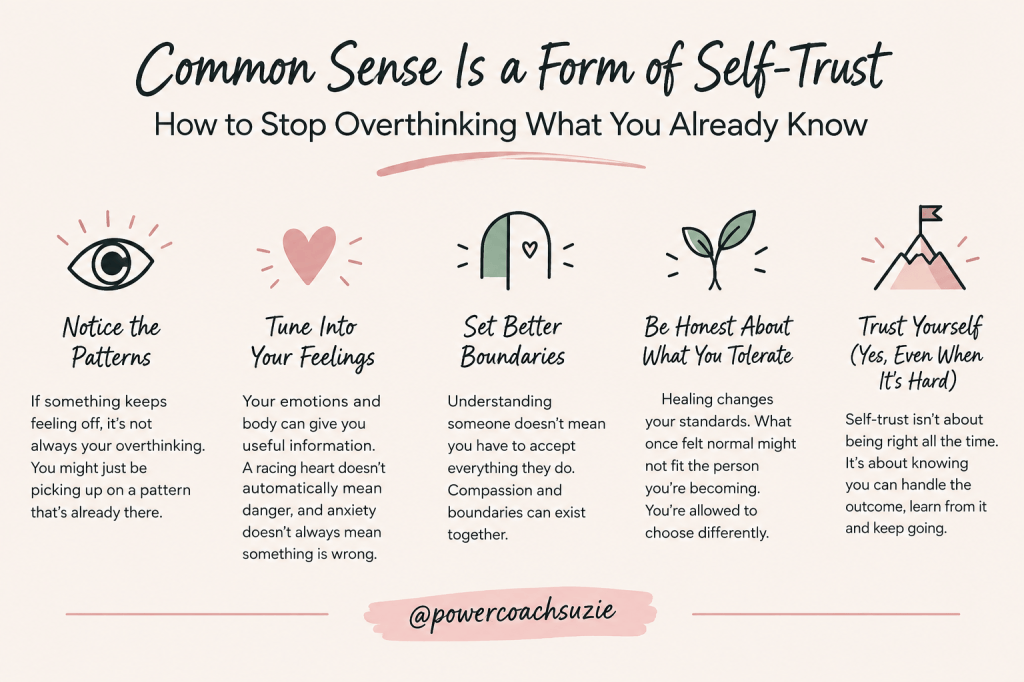
This is when common sense can really help. Ask yourself what you’d think if this was happening to someone else. Would you tell your friend to keep putting up with the same behaviour? Would you tell them to lower their expectations just because ‘maybe they’re going through something’? Would you say that feeling uncomfortable means they’re being unreasonable? Probably not. We’re often wise about other people’s problems but make things complicated for ourselves.
Your Feelings Matter, But They Need Context
I really believe in listening to what your body and emotions are telling you. Sometimes, your nervous system notices patterns before your mind can put them into words. Maybe you feel tense around someone and you leave some conversations feeling drained. Maybe you find yourself acting smaller, quieter, or more careful than usual. Notice these things.
Not every uncomfortable feeling is a problem or every reaction into a reason to run away, but still pay attention. A fast heartbeat doesn’t always mean danger, it might be excitement. Anxiety doesn’t always mean something is wrong. Feeling calm doesn’t always mean things are good. Your emotions give you information, but they aren’t always the final answer. That’s why being self-aware is so important. Be curious about the patterns, the situation, and what’s really happening. That’s when self-awareness helps the most.
People-Pleasing Can Make the Obvious Feel Complicated
If you’ve spent years being the understanding one, you’ve always been the understanding one, the one who keeps the peace, it’s easy for your own common sense to get lost under everyone else’s feelings. You worry about letting people down, about being difficult, or that saying no will change your relationships. You might even think having standards makes you demanding. After a while, you spend so much time managing others’ reactions that you forget to ask yourself what you really want.
Boundaries create clarity around what is okay and what isn’t. Brené Brown, a vulnerability researcher, author and social work scholar, has written extensively about their importance and the role they play in healthy relationships. The idea is simple, though not always easy to put into practice. Sometimes the healthiest boundary is simply deciding that something no longer works for you and choosing to step away.
Healing Changes What You Are Willing to Call Normal
One of the oddest parts of your growth journey is realizing that what you thought was normal was simply familiar. You may have moved through life exhausted without stopping to recognize the toll it was taking. You may have accepted inconsistency in relationships without questioning it. You may have built your life around caring for others and lost sight of your own needs. You may have spent so much time interpreting other people’s actions that you stopped paying attention to what those actions were telling you.
Healing changes what you expect, and that can feel uncomfortable. As you get to know your needs, patterns, and limits, things that once felt easy might start to feel different. That doesn’t mean you should judge your past self. You made choices based on what you knew then. Growth gives you new information. You’ve changed, and what you accept might need to change too.
Self-Trust Isn’t About Always Getting It Right
This is important because self-trust isn’t just about always following your gut. That’s not real empowerment. You might misread things, make mistakes, react from old hurts, or change your mind. Self-trust isn’t about always being right—it’s about knowing you can handle being wrong. You can learn, take responsibility, adjust, and move forward. You don’t need perfect judgment to have a good relationship with yourself. You need honesty, self-awareness, and the willingness to stop seeing every mistake as proof you can’t trust yourself.
Maybe You Don’t Need More Clarity
Sometimes we keep searching for clarity when what we really want is permission. Permission to leave, say no, stop chasing, admit we’re tired, raise our standards, or stop making excuses for behaviour that doesn’t feel right. No one else can give you that permission in a way that lasts. Eventually, you have to give it to yourself.
Common sense isn’t about knowing everything. It’s about being honest with yourself about what’s right in front of you. Notice the patterns. Pay attention to behaviour. Listen to how you feel. Look at the facts. Ask if your choices match the person you want to become. Then ask yourself: If I stopped trying to explain this, what would I already know?
That question can make a big difference. Personal empowerment isn’t about being fearless, perfectly confident, or never making mistakes. It’s about becoming someone you can rely on. Someone who listens, pays attention, and can say, “This isn’t working for me,” without needing to explain it in detail. Sometimes the most powerful thing you can do is stop making things more complicated than they need to be and trust what your common sense is telling you.
You don’t need to become more powerful. You need to stop giving away your power every time you doubt what you already know. Maybe that’s the real work—not finding or fixing yourself, or becoming some perfectly healed version of you. Maybe it’s just getting quiet enough to listen to yourself again, and brave enough to trust what you hear.
One.Step.At.A.Time.
Suzie
Listen to the Conversation
These are the kinds of conversations we’ll be exploring in this season of Signals & Standards with Suzie. Together, we’ll dive deeper into self-trust, emotional clarity, personal growth, relationships, boundaries, and the standards that shape our lives. Because sometimes the most important shift isn’t learning something new. It’s finally listening to what you’ve known all along.
Visit PowerCoachSuzie.com to learn more and join the conversation.

